Skip to content
Data Catalog
Data Catalog

Bring your data into focus for clarity and confidence

Build a complete picture of your data landscape with centralized curation, context and trust signals that help teams confidently use data downstream.
Key features
and capabilities

Create a complete, centralized inventory of your organization’s data, gain visibility across sources and accelerate data product creation with automated curation and enrichment.

Get a comprehensive view of your data landscape

Break down silos, uncover blind spots and identify sensitive data by having a centralized, complete view of your data.

  • Discover data across your entire organization
    Automatically connect to cloud platforms, databases, enterprise apps, BI tools and legacy systems with over 100+ native integrations
  • Gain visibility into your data
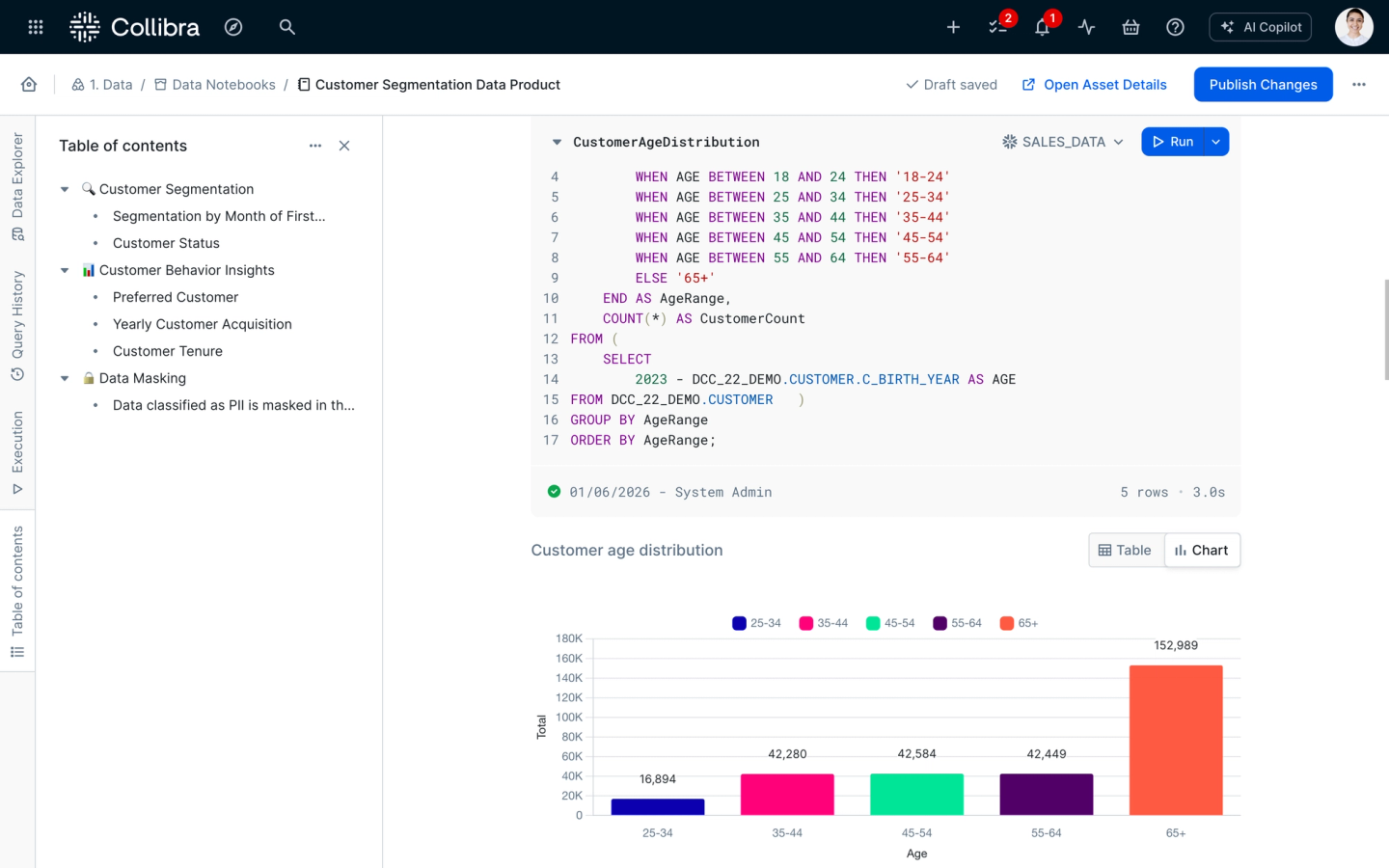
    Gain clear insight into data by quickly evaluating structure, contents and patterns using key profiling statistics and samples
  • Mitigate risk by quickly identifying sensitive data
    Automated classification improves data discoverability and mitigates compliance risk by precisely labeling data, including sensitive categories like PII or PHI

Boost consistency, clarity and trust in your data

Efficiently enhance data with meaningful context and trust signals to improve confidence.

  • Save time with automated curation and enrichment
    Reduce manual effort by automatically classifying data and generating clear descriptions for assets
  • Provide rich context through the semantic layer
    Collibra’s embedded semantic layer connects technical data to business concepts, like glossary terms and policies, making data more understandable and reducing ambiguity
  • Enforce and communicate data standards
    Certify trustworthy data and surface relevant metrics with Collibra Data Quality & Observability

Collaboratively build trusted data products

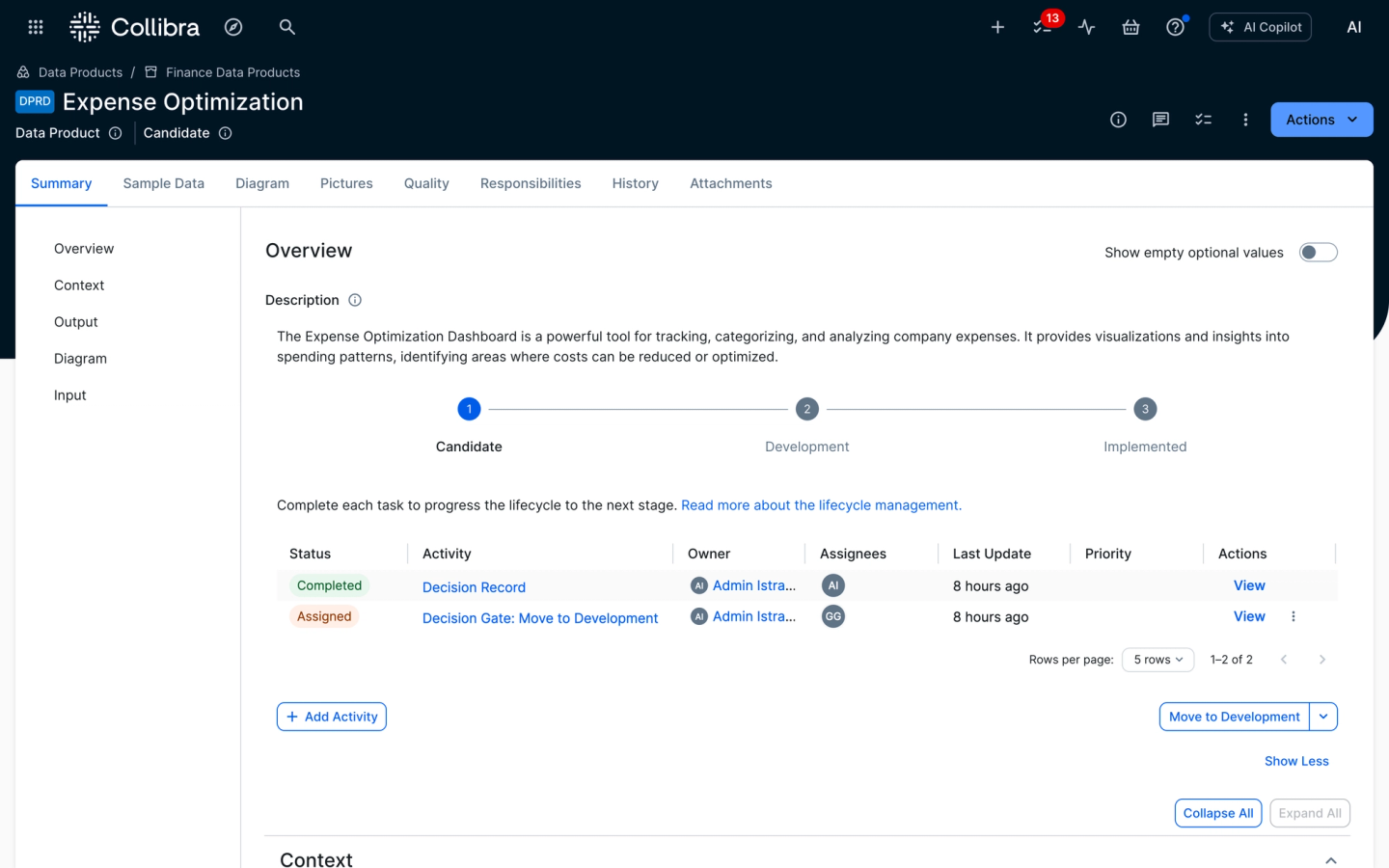
Enable teams to consistently build, manage and publish high-quality data products (reusable assets packaged with relevant context, controls and access methods).

  • Standardize data product creation
    Utilize our flexible framework to efficiently create and manage reliable data products, driving ownership, consistency and ROI
  • Define clear expectations
    Boost transparency and trust with data contracts to define technical specifications and quality guarantees and data sharing agreements to govern usage, access and compliance rules
  • Publish data products for confident consumption
    Publish data products to Collibra Data Marketplace, helping users discover, trust and consume data

Learn more about creating a comprehensive view of your data landscape.

Featured resource

Factsheet

Collibra Data Catalog: Accelerate data discovery, understanding and access

Disconnected data systems and fragmented catalogs slow down innovation. Collibra Data Catalog creates a unified view of your data landscape, helping users discover and access data through a self-service marketplace. With 100+ native connectors and automated enrichment, you can unlock the full potential of your data.

Get the factsheet
Featured resource

Product video

Collibra Data Catalog: product overview

Learn how the Collibra Data Catalog connects to your entire data landscape to provide end-to-end visibility so that your teams spend less time searching for data and more time finding value from data.

Get the product video
Featured resource

Brand video

What capabilities are required to successfully deploy data products?

Discover how to effectively manage data products in this video. Learn the essential capabilities needed to make your data products discoverable, understandable, trustworthy and easily accessible.

Get the brand video

Learn. Grow. Be inspired.

From expert insights to guided learning paths and in-depth product resources, we make it easy for every Data Citizen to use data.

Consistently recognized as a leader, setting the standard for what’s next

Gartner® Magic Quadrant for Data and Analytics Governance Platforms

Get the Gartner report

Collibra recognized as a Leader in The Forrester Wave: Enterprise Data Catalogs, Q3 2024

Get the Forrester Wave report

Frequently asked questions

What is a data catalog?

A data catalog is a single place to discover and view information to understand your data. It automatically collects metadata from systems across your organization and organizes it with business context including definitions, owners, classifications, relationships and policies. This enables users like data owners, data stewards and data engineers to quickly find the data they need to perform specific tasks or to manage and curate data for other data consumers.

What is the difference between a data catalog and a data marketplace?

A data catalog is a centralized repository for managing and organizing metadata (data about data), helping data owners and stewards and other users keep track of their data.

A data marketplace allows data consumers of all levels to find, assess and and get access to data products and other curated data assets. Some data catalog solutions have integrated data marketplaces, bridging data management with easy access to trusted data.

Why are data catalogs important?

Large organizations with complex data estates need an enterprise data catalog because it centralizes information about their data such as where it lives, what it means, who owns it, how it’s used and whether it can be trusted. As organizations accumulate data across cloud platforms, business applications, databases, BI tools and AI systems, it becomes harder for teams to find the right data and understand its context.

A data catalog solves this by providing a searchable inventory of data assets enriched with metadata, definitions, classifications, lineage, ownership and policies. This helps teams reduce time spent hunting for data, ensures consistent use of data across the business, strengthens governance and compliance and improves the reliability of analytics and AI initiatives.

Who uses a data catalog?

A data catalog is primarily used by the people responsible for creating, documenting, governing and maintaining data.

Common users include:

  • Data stewards: To manage metadata, maintain definitions, apply classifications and ensure assets stay accurate, consistent and compliant.
  • Data owners: To oversee specific data domains, assign responsibilities, track usage and ensure policy adherence.
  • Data engineers: To understand schemas and dependencies and to troubleshoot data issues and maintain pipelines.
  • Data product managers: To define and manage data products, document requirements, set SLAs and ensure assets meet business and governance standards.
  • Governance, risk and compliance teams: To classify sensitive data, monitor policy enforcement and support audits.
  • Platform and architecture teams: To maintain metadata consistency, manage system connections and support scalable data operations.
  • Security and privacy teams: To track sensitive data, verify access controls and ensure adherence to privacy regulations.

These roles use a data catalog to build, document, govern and maintain data across its lifecycle, ensuring it’s well understood, properly controlled and ready to be made discoverable and accessible through a data marketplace.

The road to Data Confidence. Get started today.